
September’s Trades Council meeting started on a sombre note as delegates observed a moment of silence in memory of our Treasurer, Peter Dales, who died in August. Peter had been Chair of the UNISON East Lancashire Hospitals Branch for many years, and instrumental in helping us to continue our work in recent years. He will be missed as both a colleague and a friend.
The meeting then had a lot to catch up on following our “summer recess”. We had a report back from a meeting held with Andrew Pryde, the DWP Head of WorkWell, Accelerators and Fit Note Policy, on the “Broken Fit Note” pilot in Barrow-in-Furness, where we had been assured that patient participation would be voluntary and had taken the opportunity to emphasise the primacy of the GP-patient relationship. We also had a report back from a meeting held with Andy MacNae MP (for Rossendale and Darwen), which had ranged across a wide number of issues but where we placed particular emphasis on support for “reindustrialisation” and our opposition to privatisation – with a particular focus on school Academisation, given the then breaking news about the plan by the Catholic Diocese of Lancaster to force its schools to be part of multi-academy trusts ((6) Facebook).
It was agreed to make representations to the Government in the context of a consultation on reforming consumer protection for home upgrade schemes.
We support the Government’s ambition to deliver “a retrofit system that is fair, effective, fit for the future”. The UK Green Building Council say that “The UK has one of the oldest and leakiest housing stocks in western Europe, possibly in the world. Yet 80% of homes that are lived in today will still be inhabited in 2050. Without urgent, nationwide action, our buildings will continue to waste precious, and increasingly expensive, heat as it leaks out of every uninsulated wall, roof and door”.
We see this, however, as but one aspect of a widespread housing standards problem. The Centre for Ageing Better estimate that “3.5 million homes in England (14% of the total) are defined as non-decent. There are currently 7.5 million people of all ages living in a non-decent home in England. Of these, approximately 2.3 million are aged 55 and over and 1.5 million are children”. They add: “Six million homes in England (a quarter of all homes) report problems with condensation, damp or mould. Of households headed by someone aged 55 to 64 that have someone with a long-term illness or disability living there, three in ten have problems with condensation, damp or mould”.
We think that the Government is right to think that bringing homes up to standard is a significant challenge for our country. We think it is also right to think that those who are able to take advantage of Government support to make improvements should get prompt and effective corrections if work goes wrong. The more that “retrofit” schemes become associated with doing harm rather than good, the more difficult it will be to get property owners to take them up.
“Changeworks” recently reported (13/07/2026) that “Two-thirds (66%) of Scots say worries about poor-quality work and ‘cowboy installers’ are holding them back from making home improvements to lower energy bills and make their homes more comfortable in summer and winter”.
But in addition to considering how compensation and repair should work when schemes go wrong, we think that the Government need to consider how much simply encouraging people to take up grants will really affect the issue. There are wider issues about how much money people gave to commit to such works, and about confidence in the options offered.
The Scottish TUC has said: “Recent research by Scottish Housing Day partners found that 63% would like to make improvements to energy efficiency of their home but could not afford to; 48% think it is difficult to access information on how to make improvements; and 38% thought it would be too difficult to organise”, whilst “Changeworks” said in February 2026 that: “A recent survey conducted by 56 Degree Insight ……. found that 41% of Scottish households say they cannot afford retrofitting improvements – a rise of 10% since 2023. Meanwhile, more than four in ten homeowners (40%) are not confident they could find trustworthy advice, with 15% unsure of where to start or go to for support”.
As a motion adopted at TUC Congress this year agreed, we really would be best approaching the issue of the condition of out housing stock as a public works issue, with task-forces directly employed by local Councils playing a key role in support and delivery.
A further matter discussed was the consultation by ACAS into a revised “Code of Practice on disciplinary and grievance procedures”. The proposed Code would make give more detailed suggestions about good practice than the current version, but what has gained most attention is its increased focus on early “informality”.
It expressly embeds informal resolution as a recognised first step within the statutory framework, for both employer and employee concerns. On employee concerns it is maybe a bit less mandatory, saying: “If a worker has a concern about someone’s behaviour, it is often best to try to speak with them and discuss how it might be resolved. If it is not possible to speak directly with the person, or the worker is not comfortable doing so, they should speak with their line manager or someone else in the organisation who may be able to help”.
In responding, we have been keen to emphasise that we do not accept seeing “informality” as code for “keeping the Union out of it”. Our concern in this area is that employers will interpret “informally” as meaning “without Trade Union support or representation”. Our experience is that this sort of “definition creep” is not unusual, and that employers – and, perhaps more particularly managers – will use the idea of “informality” to deter staff from seeking shop steward/representative involvement. The consequence, then, is that some staff will be fearful of acting on their own and will be, effectively, intimidated into silence.
In our opinion the right to be accompanied by a steward or representative is an absolute, above and beyond the statutory right.
We have argued that the Code should make it clear that “informality” refers to the level of approach, rather than as to whether the employee has a shop steward/representative to support them and help them explain their case. Para 10, already says that “If a worker requests to be accompanied where the statutory right does not apply, it is good practice to consider whether allowing this could help resolve the issue”, and we have asked for this to be strengthened. It must be said that a firm position at Branch level is often the key here. In disciplinary and grievance matters no one should have to face their boss alone.
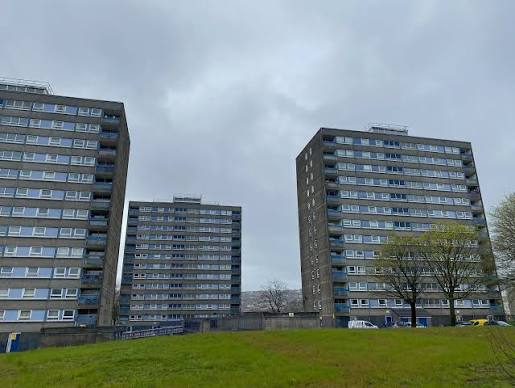
Returning to the question of housing, the Trades Council was disappointed to hear that it had not been included in the consultation exercise run by the Borough Council on its “Blackburn with Darwen Housing Strategy 2026-2036″, which was adopted by the Council Forum on 23rd July.
In our previous submissions to the Borough Council on the question of housing, we have highlighted that the 2018 Housing and Economic Need Assessment Report said (at a section numbered 8.25, which should have been 9.25 – ie. it is in Section 9 “PRIVATE RENTED SECTOR”) that “in many cases people were living in private rented accommodation due to a lack of “social rented” stock and that the number of persons under 35 living in private rented accommodation had risen from 2001 – 2011, whilst there had been a decline of those in homeownership or social rented housing”.
“Shelter” calculate that over a million British households are in want of housing for social rents.
We understand (from published FOI requests) that on 6th March 2024 there were 5,416 people on the Blackburn with Darwen housing waiting list, and 231 households had then been waiting for social rented accommodation for 10 years or more.
The “Lancashire Telegraph” in February 2023 (“Hundreds of social homes in Blackburn with Darwen lost”) reported that: “Data from the Department of Levelling Up, Housing and Communities show 30 social homes were built in Blackburn with Darwen in the 10 years to March 2022 – although none were built in the last year. Meanwhile, 540 social homes were sold and 120 demolished over the same period – meaning the area has lost 630 homes over the past decade”.
Unfortunately, the new Strategy does not appear to offer much in respect of a response to this situation. It has a Table showing “Required Housing Mix by Tenure”, but this shows the types of property in demand in each category, rather than a comparison of the relative levels of demand for each tenure type.
It does seem to reinforce the point we have made previously about the unmet needs of single males, with 30-35% of social housing need being for 1 bed tenancies. But in respect of the overall position, the Strategy merely confirms that “our demand for social housing (is) greater than our supply”. It also says that there has been a 92% increase overall, from 168 assessments in Q1 2020/21 to 323 in Q4 2025/26, of households approaching the Housing Needs and Support Team for a homelessness assessment.
It does not say how many “live” applicants are registered with “B-with-us”, but it does say that 45% fall within “Band 5” for allocation purposes and that these people “have little prospect of securing social housing within the borough”.
Where matters are so hopeless it would not be a surprise to find that the “B-with-us” live register represents an under-estimation of our local social rent housing need. But, unfortunately, even organisations like “Shelter” base their estimations of social housing need on “waiting lists”.
A “Housing Strategy” with so little to offer in respect of the, admittedly national, social housing crisis is a bit like a Bounty Bar with no coconut in it. Doubtless, the Borough thinks there is little it can do – but there could at least be more open acknowledgement that this represents a significant failure of social policy.